Chapter 4: The Calm Before The Storm
Dig and Pour: The Lull
Between mid-March and the beginning of June, the house build was relatively chill. There weren’t any problems with excavation, the concrete work for the foundation was done well and everything moved along according to schedule. We only visited the job site about every other weekend. We lived 3 hours away, something I would never recommend if you’re building a custom home.
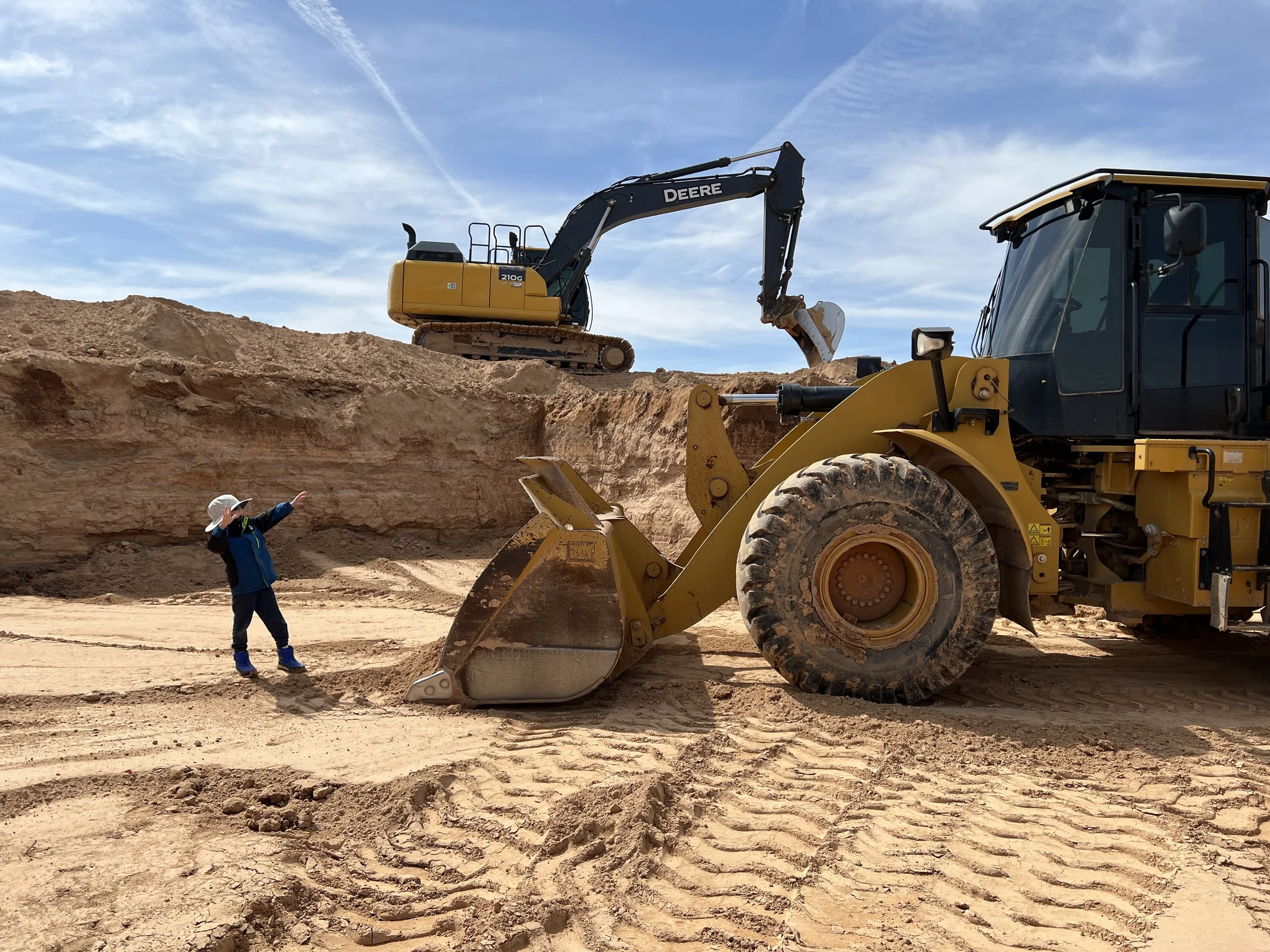
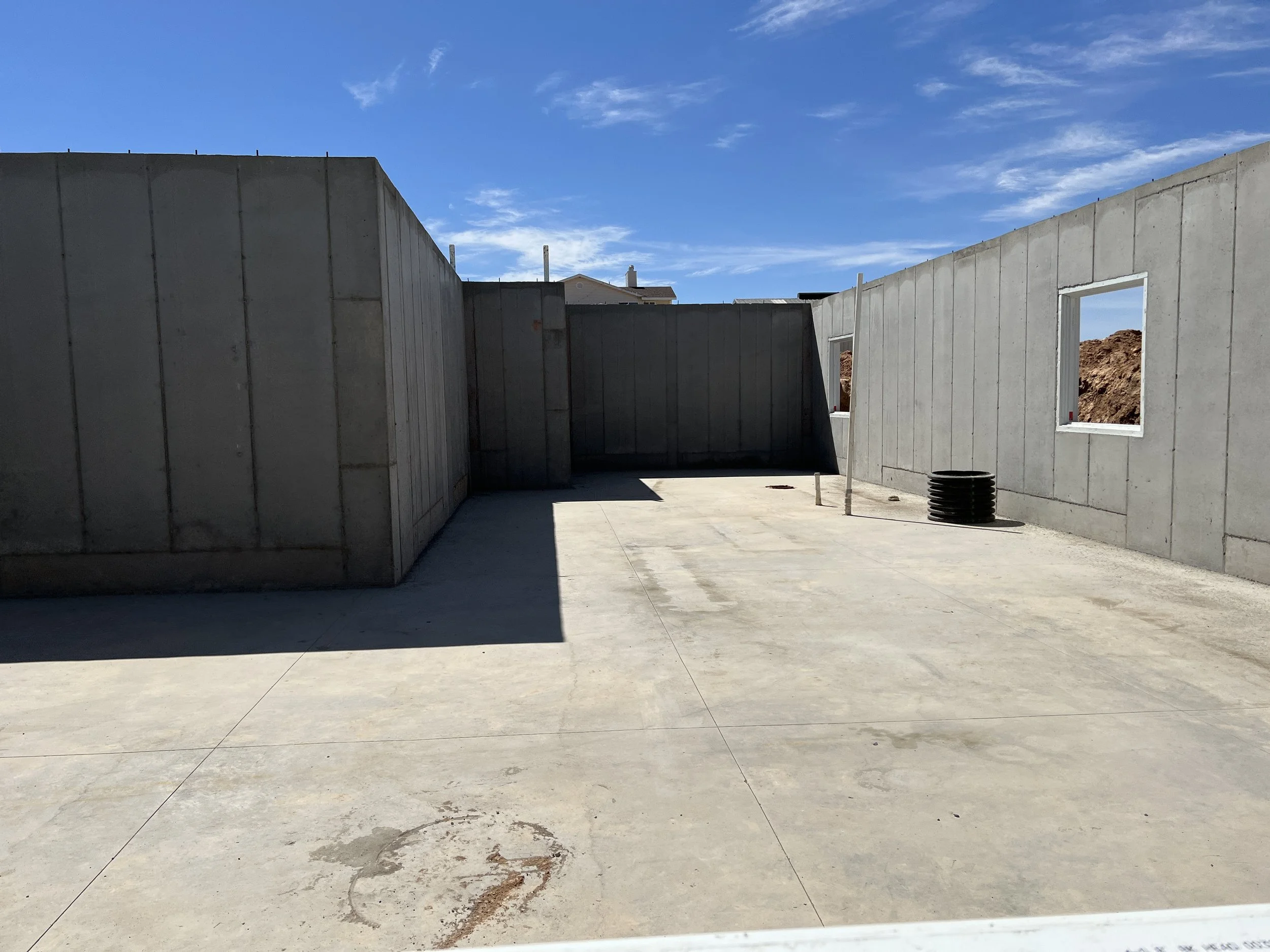
Us and the kids had fun walking around a construction site, a new experience for them; walking down into the basement when it was just a huge hole, the shock and awe of how massive the excavator digging bucket was, enjoying the echoes once the foundation wall was poured, and running around the big lot.
During this time, we thought there wasn’t much we needed to do. Our builder told us when we started digging that the only decision he needed for finishing choices was the windows since those were 3 months out on delivery.
He should have told us that we needed all the finishing selections made not only before excavation, but before finalizing the budget. His approach was to allow allowances for the finishing phase and to decide on the actual choices later. Not a good idea.
The problem with that is that if we knew what everything on the finishing side would actually cost, we would have made structural changes to the house to accommodate the budget for certain finishing materials. Also, our appraisal for our one-time close construction loan was based off certain finishing choices like our hardwood flooring, which means we couldn’t change that halfway through the build easily.
Anyways, while we thought there was nothing to do, we could have been planning out our finishes, even though those decisions were already overdue.
The Foundation pouring went really well. The concrete work was one of the few things that was actually done really well because of our builder hiring the right subcontractor. Our builder decided to try a mono-pour, to save time and in the end it actually costed us more because of the engineer needing to adjust something. Again, making decisions when it’s too late in the game.
June: Framing Begins and So Do The Problems
When framing started in June, all of a sudden our builder started texting us asking for final decisions on this and that. And he would say things like “I need to know by tomorrow or asap.” And it wasn’t even on our radar because he never gave us any kind of schedule regarding when we needed certain things decided, even though we asked for one.
Yet again, another red flag that we should have fired the builder and dealt with the delay and cost of finding a new one.
When framing started, the communication issues escalated and the repercussions of rushing the design phase started to emerge.
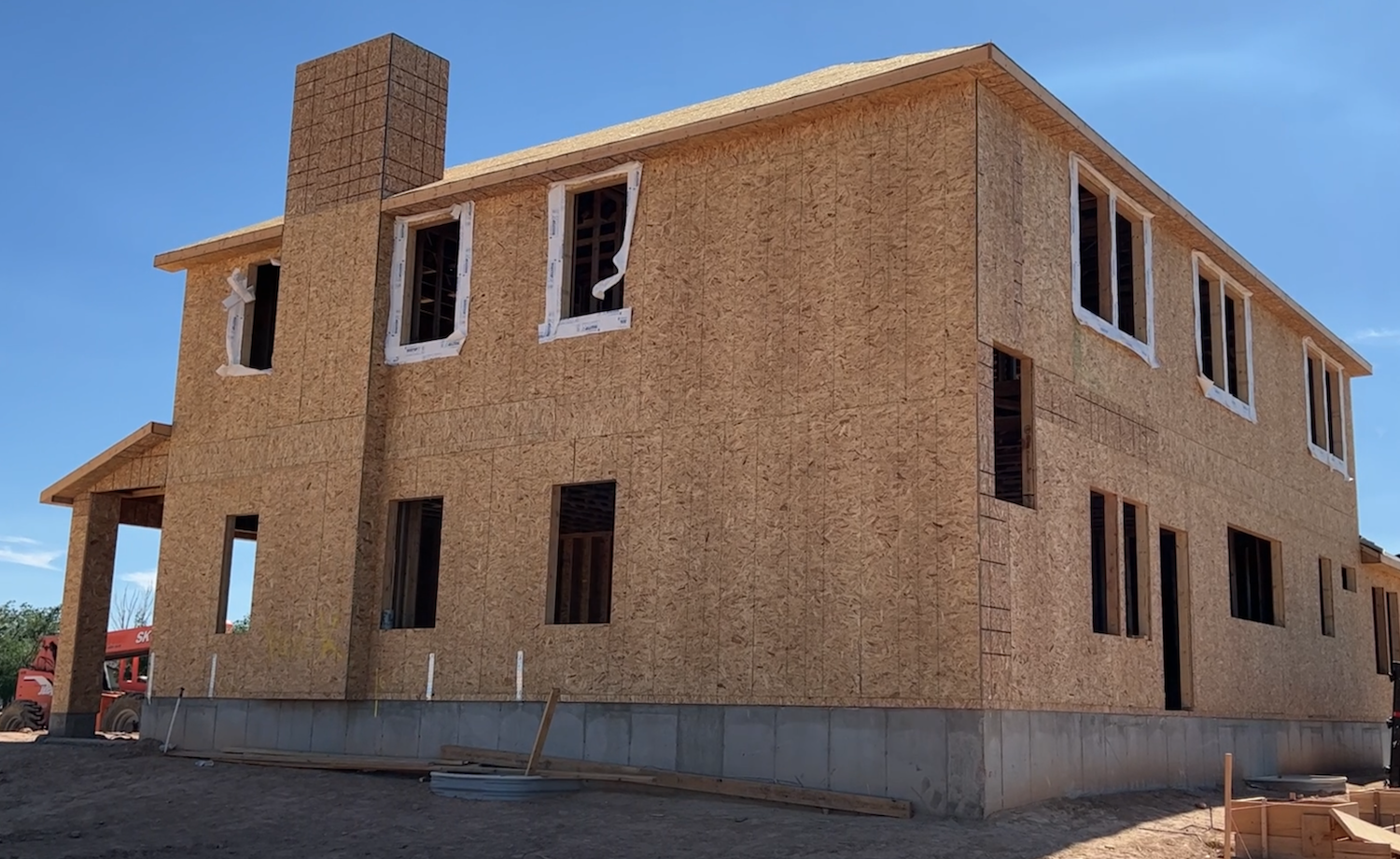
One day near the beginning of framing, our builder asked us about the height of the windows from the floor. This is something that should have been decided way earlier during the design phase. The framers were about to place the windows too low so we rushed down on a Friday, packing the kids in the car, and drove 3 hours to find no GC on site, and had to communicate our redlines in the framing to the framing crew ourselves.
They weren’t even following the redlines I sent to our GC that he asked for a couple weeks prior and approved.
On May 22nd, I asked the GC if his framers got our redlines about the master bathroom wall and door moving. He never responded.
As the homeowner you should never to communicate choices to the subcontractors. You should never have to communicate with them at all. These decisions should have been finalized during the design phase. This is why designing a custom home can and should take a year or longer.
This should have been strike two and we should have fired the builder. We didn’t because we thought we couldn’t afford to but in hindsight we couldn’t afford not to.
There’s nothing wrong with a builder saying that after a certain date or milestone, you cannot make any more changes or if you do then you’ll incur a change order fee. Our builder never established any such restrictions, which we initially liked but it just created chaos.
Since we never built a house before, we weren’t sure how easy or difficult certain changes were. With that said, our framing changes were very minor. We wanted to change the window height off the floor, move a portion of the master bedroom wall 1 foot and frame out the basement more fully.
One weekend, we went down to spend the night in our trailer on the lot and watch the framing process. We were excited for this phase because you get to see your house literally take shape. We met the framers and enjoyed watching them, naïve to what’s normal and what isn’t.
The framing process was fun to watch but only in hindsight and reviewing timelapse footage did we realize how disheveled it was. They didn’t frame the house in the most logical manor for efficiency and integrity. They left whole sections unsheathed, and portions of the framing wasn’t fully finished until weeks after the initial framing was supposedly done.
And there was a ton of lumber waste that could have been avoided. I literally watched a framer cut a 2x4 stud in half, throw away the other half and then an hour later he needed a 4-foot section so he cut another 2x4 stud in half.
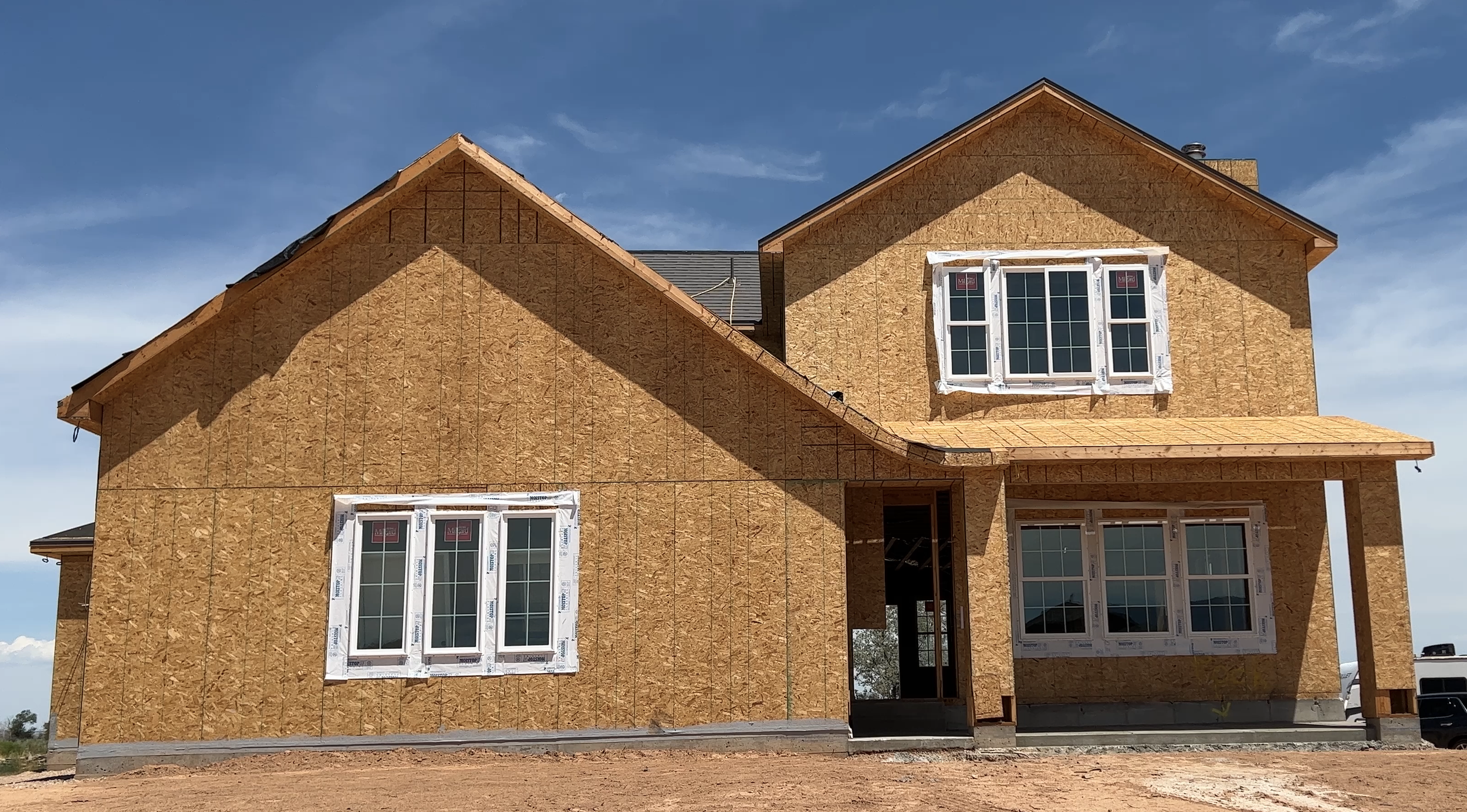
Overall, after the initial communication issues regarding the redlines, the rest of the framing process seemed to go well until...
Our Staircase Got Mess Up
One day we dropped by to see how things were going and we noticed our staircase was framed as a winder on the landing, instead of flat. We specifically had the architect design it to be flat in the plans. There was supposed to be 4 steps and then a flat landing and then the rest of the steps going up to the second floor.
Winder staircases are mostly out of code and for good reason because they’re more dangerous.
Here’s a picture of what it looked like:
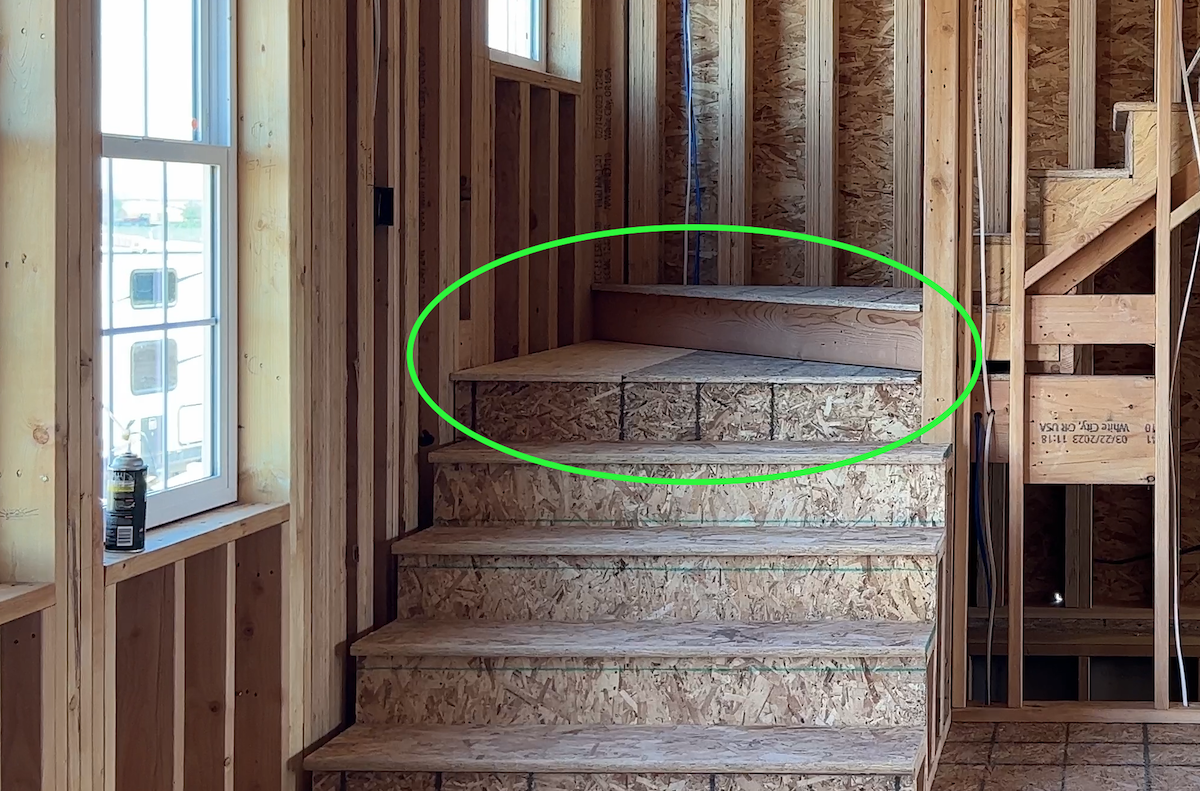
The builder told us that was the only way to do it, even though the plans said otherwise. We should have made the framer rip it out and start over. He didn’t measure the stringers correctly and the overhead clearance was off. It could have been fixed but would have costed time and money. And that was on the builder and then on the framer but what did we know. So we went along with it grumpily.
In the end they brought the winder stair landing to code buy fudging a few things so it wasn’t as dangerous but it still wasn’t what we wanted. They made the basement staircase correct but said they couldn’t do the same thing on the main floor. Anyways…
Signs Were Showing Up Everywhere That We Needed to Stop NOW
But we didn’t listen. My wife was more attuned to these signs than I was. This is where my wife started to get very aggravated. We were spending way too much money and not getting what we wanted on various features like the staircase.
This is also where my attention started to be pulled away from my business and towards being a manager of the builder (which no homeowner should have to do.) This caused my income to start to decline.
My wife started mentioning at this time that we should fire our builder but I was too scared of the repercussions of having to find a new builder, pausing the build, racking up extra interest and still having to pay the builder for damages for terminating the contract early, per his contract terms. In the end the cost of firing him then would have been a lot less then continuing.
But remember, I was operating out of the fear that the window of opportunity to build this house was small, and so we needed to keep moving to avoid a mid-construction foreclosure. I was also afraid that if we fired him, the whole thing would fall apart because we wouldn’t be able to afford a different builder.
This fear was a clear sign that we couldn’t actually afford to build this house because we couldn’t afford to do it right.
We partly chose the builder we did because his rate was 7% lower than other custom home builders in the area and he allowed us to manage the second half of the build. It was only because he allowed us to manage the second half that we were able to close on the construction loan because he cut $50k off his rate to compensate for us saving him time. He would still oversee us and process invoices and manage inspections but we were the ones that were going to schedule the subcontractors and show up on the job site regularly.
If we fired him now and hired another builder, we would lose that privilege and cost savings and would not be able to afford to finish the house. I wish now we had taken that route but then again, if we did, I probably wouldn’t have been pushed to become a general contractor and the course of my career would have kept heading in the wrong direction. So… we can learn from mistakes, help others avoid them but can’t live in regret. It was meant to go the way it did.
Does that mean I’ll gladly make the same mistake again? Absolutely not. Does that mean others should do what I did? Absolutely not.
Protruding Electrical Pipe
Soon after the staircase fiasco, our builder showed us the main electrical conduit shifted during the foundation pour so it was sticking partially out of the wall space. See picture:
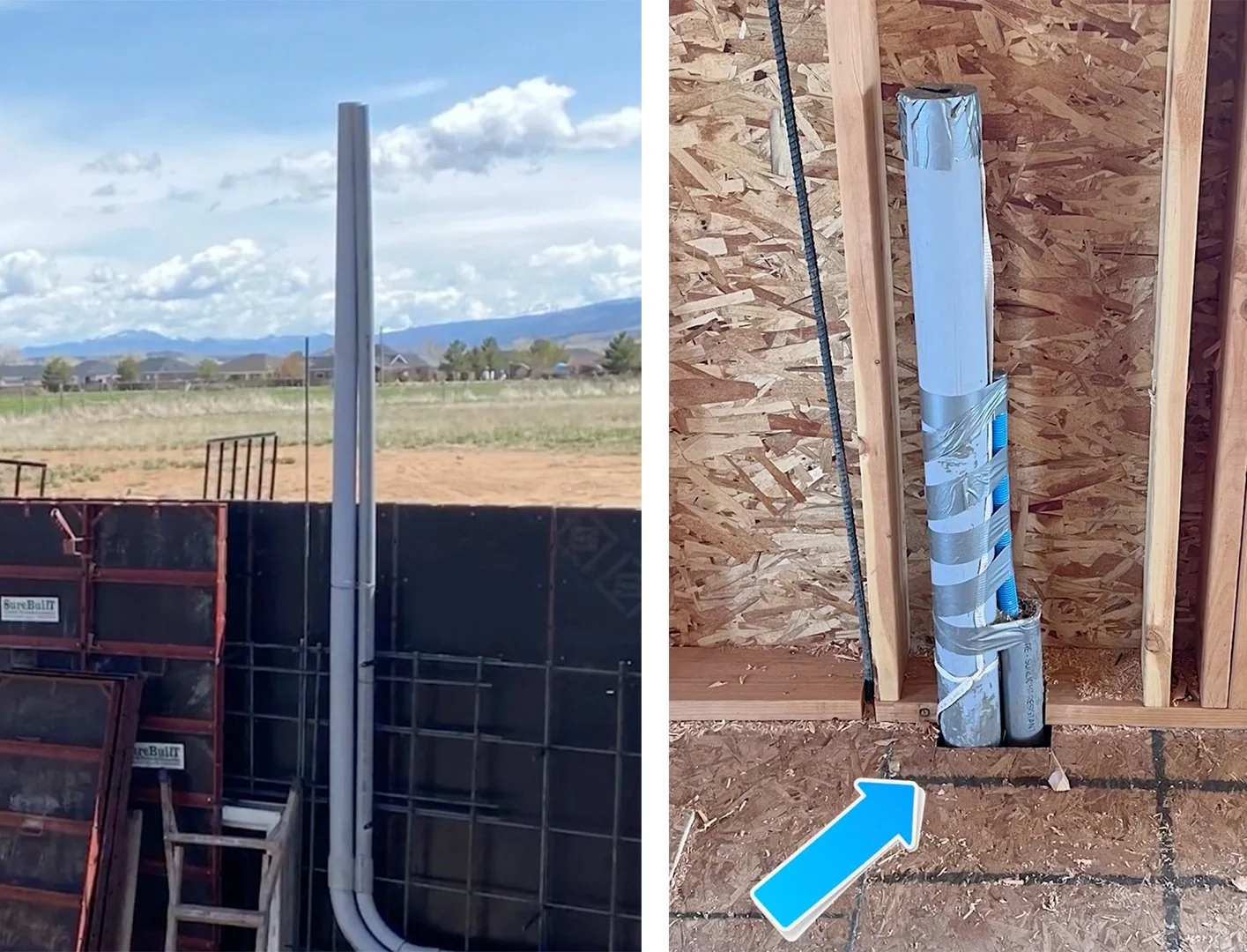
So he asked us if it was okay to fur out the wall a couple inches to cover the pipe. We tried to push for other options and they even tried to melt the pipe to bend it but none of it was a safe solution, it should have just been buried and redone. So they had to thicken the wall, which ate up some living room space.
It could have been avoided if the pipe was better secured in the foundation wall or better yet, that it was just placed on the outside of the house like it was supposed to be, instead of letting our builder try to be clever.
Framing Inspection
It took 3 weeks and it was only during the finishing phase that we discovered framing problems because again we didn’t know how to inspect raw framing, at a glance it looked fine.
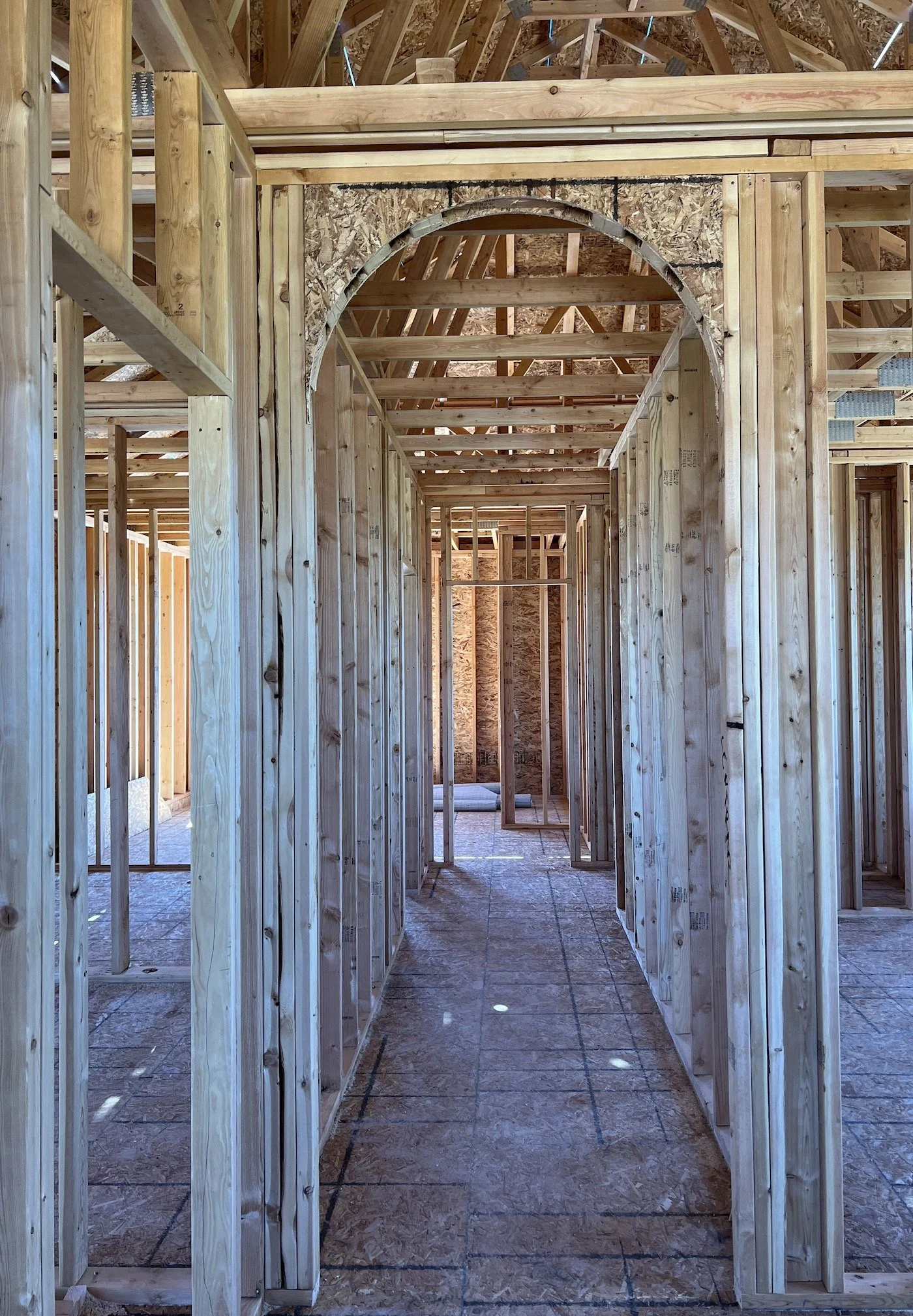
When the framing was complete, we did a walk-through “inspection” with our builder. It was the first time our builder met with us since the beginning. Overall, everything seemed fine. We didn’t know what to look for. We didn’t know how to check for square walls. We also couldn’t tell from the rough framing whether a door was too close to a wall or a door jamb was twisted. When you’re not used to seeing a framed house, you get blinded by all the wood. I know how to evaluate that now of course, but then I was assuming my builder knew how to check for those things. During the drywall and finishing carpentry posts later, we’ll come back to the framing issues that were discovered only then.
In the next chapter, the mechanical phase, is when the build took an absolute nosedive and the panicking cranked into high gear.